

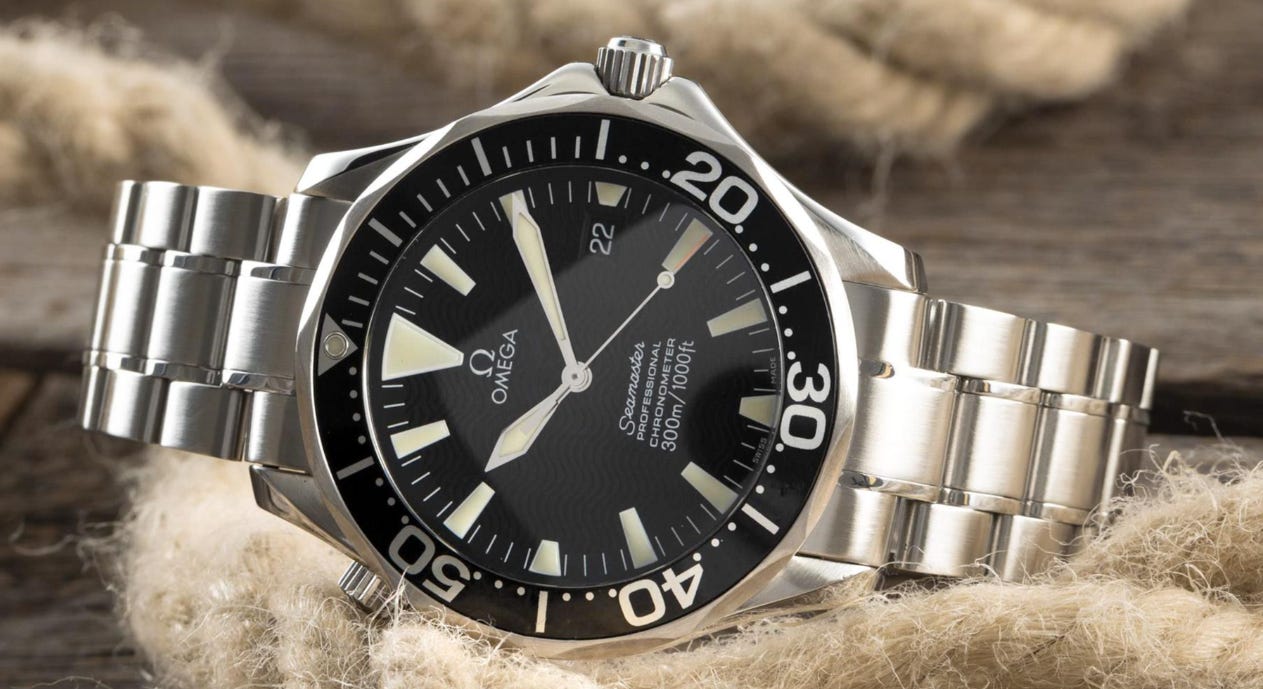
If there’s a watch that I have been looking to buy for a while, is the Omega Seamaster. Not the modern though (still a good watch), but a 20-year old reference that is different from most of what came after it. Sword hands, big triangle at 12, alluminium bezel - like old Omega divers used to be. As the right opportunity to acquire it came about, I wanted to dive deeper in its history and significance.
The Diver That Refuses to Age
Can I say that the Omega Seamaster Professional 2254.50 seats in the “sweet spot” of history? Dimensions-wide, it certainly has an affinity with Seamasters of the 1960s, a thin and slender profile, in stark contrast with the high-tech, ceramic-clad overweight modern models. It also has the characteristic sword hands and “big triangle at 12” of certain military Omegas like the 165.024 - all of that is lost in new Seamasters.
It is also known as “Peter Blake”, the two-time America’s Cup winner yachtsman and Omega ambassador, who lived exactly the life this watch was designed for - bar the tragic death sailing the Amazon river in 2001.
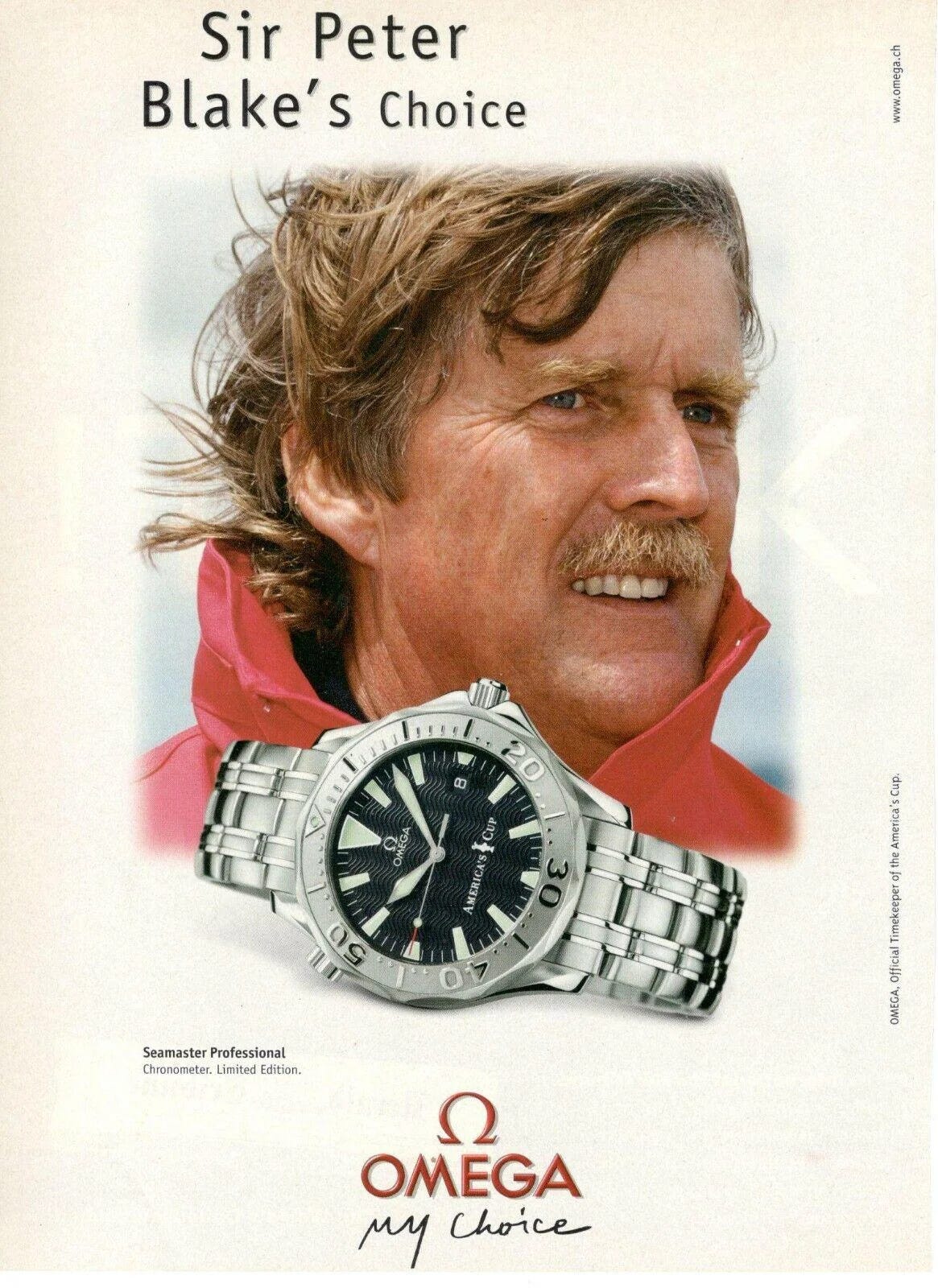
For long time in the shadow of the “James Bond” 2531.80 and its 90s pop culture iconic status, in the past 10 years the Peter Blake came out strong as the purist choice who wants the old style, military-spec Seamaster on their wrist.
Design
I look at modern divers (ehmm, certain modern divers) and I see flashy, big, ostentatious man jewellery. I can’t be the only one. But the 2254.50 was not designed to achieve that look.
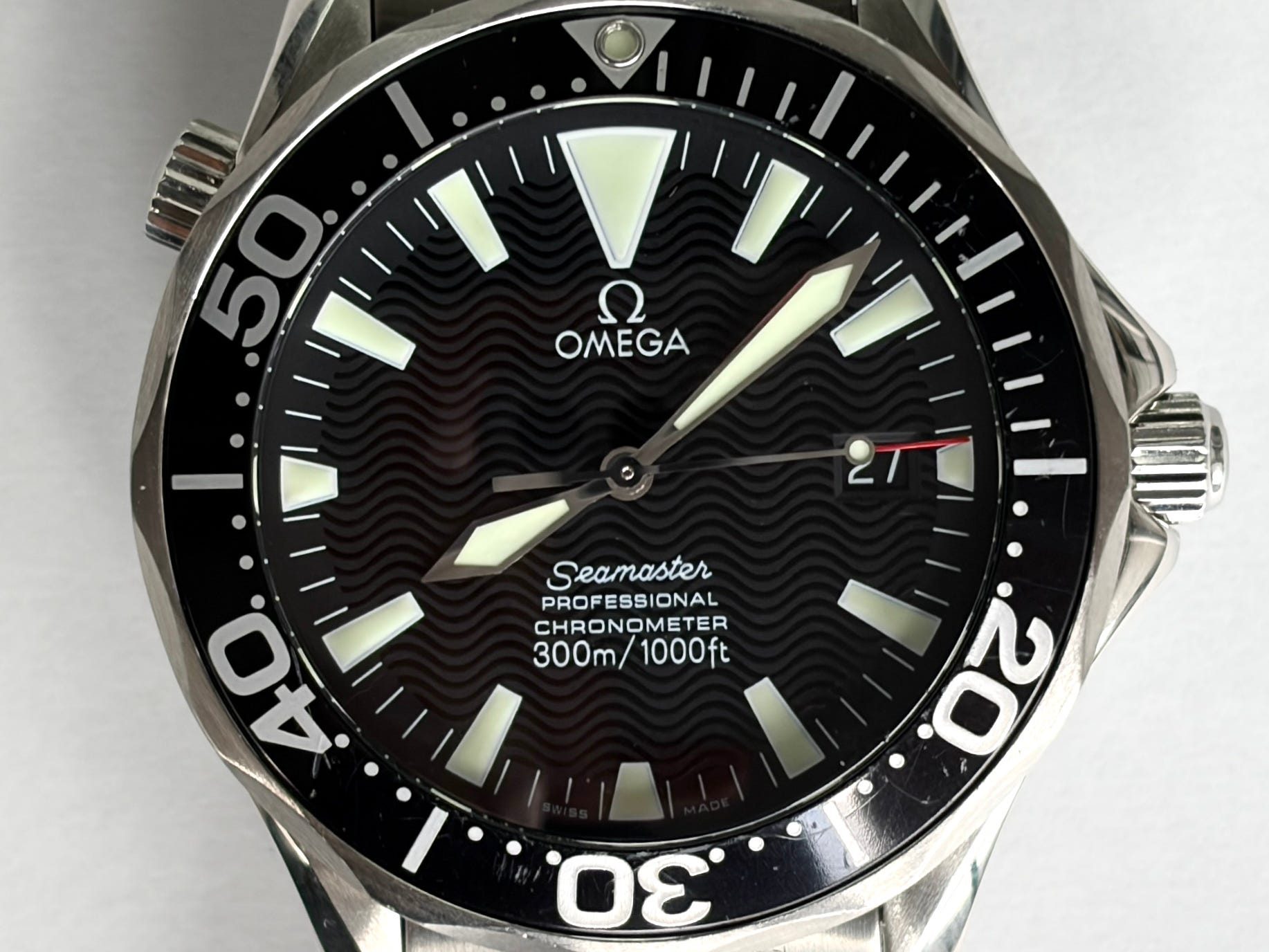
What attract many are the sword hands. It’s not completely clear why Omega adopted skeleton hands in all modern Seamasters; one can only guess that after the success of GoldenEye (first Bond/Omega movie), the company chose the 2541.80 design (quartz watch, mind you) as their own trademark. But sword hands, a nod to the military-spec Omegas issued to the British Ministry of Defence in the 1960s, have a much more purposeful look; their lume glows like a torch well into the night.
Then there is the dial itself, with the “Big Triangle” at 12 o’clock, another vintage military cue that makes it easier orienting the watch at night. The wave pattern on the dial is in line with all modern Seamasters.
Finally, the bezel. The scalloped edge introduced in the 90s is there, but the aluminium insert looks different. Compare the fonts of the Peter Blake with modern Seamasters, and you will notice how oversized and bold they are. Again, purposeful design.
While the design traits mentioned above (luminous hands, big triangle, bold fonts) are all meant to make the watch highly readable, the 2254.50 surprises first-time wearers on the wrist for how compact it wears. Its 41mm case diameter is larger than its contemporary rival—the iconic 40mm five-digit Rolex Submariner 16610 - but the Omega actually feels much smaller, thanks to a remarkable 11.5mm thickness. The "Peter Blake" Seamaster uses its ultra-thin profile and lyre lugs to hug the wrist, sitting low and centered.
Omega Calibre 1120
Under the solid caseback we find the Omega Calibre 1120, coming from an era where there was no shame for high end manifacturers to use off-the-shelves movements.
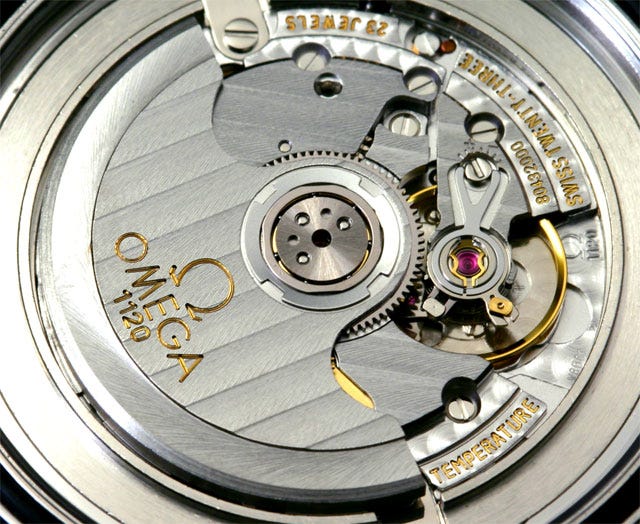
It is essentially a modified ETA 2892-2, where Omega added two extra jewels and turned it into a chronometer-grade powerhouse. Because it’s based on such a established architecture, it’s a workhorse in the truest sense of the word, and almost any watchmaker will know exactly how to fix it and find spare parts. The power reserve (44 hours) was normal for the time, probably falling short compared to modern movements, but in line with a watch that you can wear every day.
Buying Guide
Where and when your truly lives (Japan - 2025), there’s no shortage of Omega Seamasters 2254.50 available in online retaliers, with a price ranging from just short of 2000 USD for beaten up pieces, to 3500+ USD for very good conditions. Different situations in brick and mortar shops, where they are a rare sighting.
Box and papers are almost unheard. It was an everyday watch at the time, who would want to keep box and papers (past the warranty expiration)?
The obvious place to examine when you find one is the aluminium bezel, which can show many scratches. I have two good news here. One, most scratches highly visible on pictures, will not be noticeable in real life; if they appear short and thin on picture, you will barely notice them while wearing the watch unless you keep turning it around until the light just catches the scratched area. Two, Omega will still service the watch and replace the bezel if you ask for it; there is no need to be precious about 'originality' or the 'integrity' of this piece: it is a Luminova bezel that can be swapped for a factory-fresh one that is exactly the same. Nothing is lost, and the watch will look better.
Which brings the question: buy the cheapest model out there and get it polished and serviced by Omega (which will cost you around 1000 USD, including the bezel replacement but provided that the movement hasn’t something terribly broken), or go for a more expensive one with no need to service? At the end it’s up to you. I think the middle ground is the best choice: look for a case in good shape, a watch that is running decently (good accuracy, amplitude and low beat error), and compromise on a few bezel scratches if the price is good (in the 2000 to 2500 USD range). You will always be able to replace the bezel down the road the next time you service it.
Market Status
How does it stack up today? If you look at its contemporary rival Submariner 16610, you will be looking at paying one third of its price for a watch that has similar size and features; both are great (I know - I have both), can be worn in every situation, as a beater watch up to every day office watch.
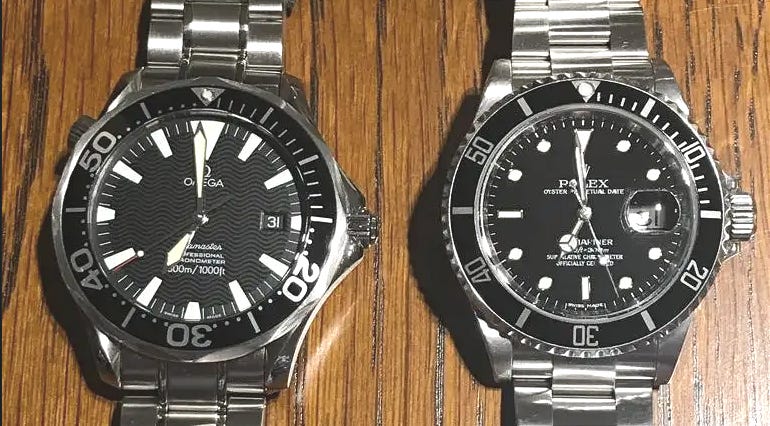
Longer term, it is certainly a watch that will hold value but do not expect crazy appreciation - so don’t overpay for it and wait for the right deal which will certainly come. There will always be many pieces available on eBay/Chrono24, more will come up, and it’s not vintage enough to attract the most sophisticated sector of collectors. The fact that it’s so robust - the movement, the sapphire glass, the case, means also that there will be no shortage in the future.
It would classify it as an enthusiast best buy. The watch you can wear every day, but with its originality and story. Something that can always spark a conversation when you meet like-minded folks.